Your Brain on Weird: The Researchers Mapping What Avant-Garde Art Actually Does to You

Dr. Marcos Vidal has a question he's been asking for about a decade, and it goes something like this: what happens inside a human brain when it encounters something it genuinely cannot categorize?
Not something unfamiliar, exactly. Not something foreign or culturally alien. Something that the brain's entire pattern-recognition apparatus reaches for — and misses. Something that refuses to resolve into meaning no matter how long you stare at it.
For most of human history, that question lived in philosophy departments. Now it lives in neuroscience labs, and the answers coming out are rewriting what we thought we understood about perception, memory, and the strange loop between what we see and who we become.
The Predictive Brain Meets the Unpredictable Object
The dominant framework in contemporary neuroscience holds that the brain is fundamentally a prediction machine. It doesn't passively receive the world — it constantly generates models of what the world should look like, sound like, and feel like, and then checks incoming sensory data against those models. Most of the time, the data confirms the prediction and the brain barely registers it. Your coffee cup is where you left it. The floor is still flat. Nothing to update.
Art, at its most conventional, operates inside this system. A landscape painting triggers the brain's landscape-recognition architecture. A melody resolves to its expected chord. The experience is pleasurable partly because the prediction is confirmed — the aesthetic equivalent of a satisfying click.
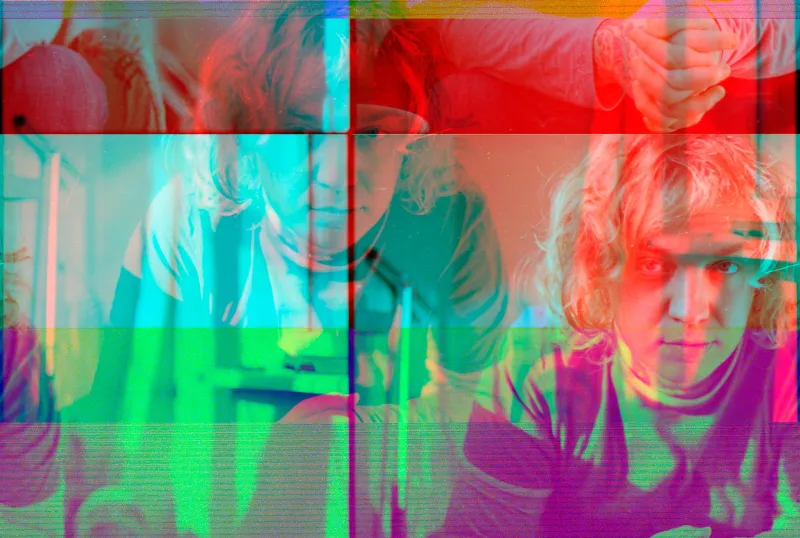
Avant-garde and experimental art does the opposite. It generates a prediction and then detonates it. The installation that looks like a room until you walk in and realize the gravity is wrong. The composition that builds toward a resolution that never arrives. The image that your visual cortex keeps trying to parse into a face and keeps failing.
What happens in that failure state is what researchers like Vidal and his colleagues at institutions across the country are now actively mapping — and it turns out the failure state is where things get genuinely interesting.
Rewiring in Real Time
In studies using fMRI imaging, subjects exposed to highly unconventional visual art — think abstract expressionism at its most chaotic, or digitally manipulated imagery that defies spatial logic — show significantly elevated activity in the anterior cingulate cortex, a region associated with detecting conflict and managing uncertainty. That's expected. What's less expected is the downstream effect: sustained engagement with that uncertainty appears to strengthen connectivity between the brain's default mode network (associated with imagination and self-referential thought) and its executive control regions.
In plain language: sitting with something confusing and beautiful for long enough may actually make your brain better at holding complexity. Not just aesthetically — cognitively.
Researcher Dr. Priya Nair, who runs a perception lab in the Bay Area, has spent years studying participants before and after sustained exposure to immersive, non-representational art environments. "What we keep finding," she says, "is that the brain doesn't just process the experience and file it. It seems to use the experience as a kind of training data for how to handle ambiguity in general. People come out of these environments measurably more tolerant of uncertainty in unrelated contexts. Their problem-solving approaches get more flexible."
That's a remarkable claim, and Nair is careful about overstating it. The studies are small. The mechanisms aren't fully understood. But the pattern keeps showing up.
Memory, Emotion, and the Art That Won't Stay Still
Another line of research focuses on memory encoding. Conventional experiences — the kind that confirm predictions — are processed efficiently and stored efficiently. They don't leave a particularly deep impression unless something emotionally significant is attached to them.
Experiences that violate expectation are encoded differently. The brain, faced with something it couldn't predict, flags the experience as important and processes it more deeply. This is why you can remember exactly where you were the first time you heard a piece of music that genuinely surprised you, while the last hundred songs you half-listened to have vanished without a trace.
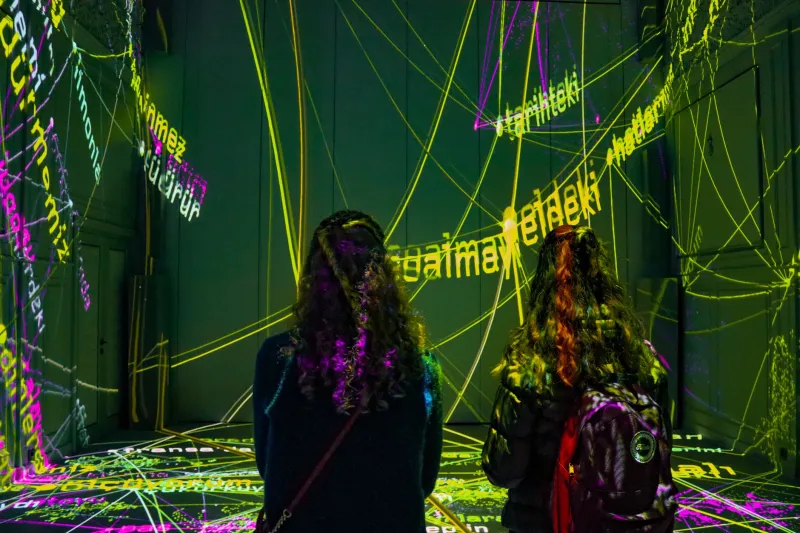
Immersive art installations — the kind that transform entire rooms into disorienting sensory environments, or that use technology to make physical laws feel temporarily suspended — appear to trigger this deep-encoding response reliably. Participants in studies conducted at several university art-science partnership programs report vivid, persistent memories of these experiences months and even years later, often with an emotional weight that they struggle to fully articulate.
"People keep saying the same thing," notes one researcher whose lab collaborated with an experimental theater company in New York. "They say it felt like a memory before it was over. Like they knew while it was happening that it was going to matter."
The Question Nobody's Answering Yet
The science here is genuinely exciting, but it comes with a caveat that the researchers themselves are quick to raise: measuring neural activity is not the same as measuring meaning. Knowing that a certain kind of art increases connectivity between brain regions doesn't tell you what the art means, or whether its value can be reduced to its neurological effects.
There's a version of this research that could be used — is probably already being used — to design experiences that hack the brain's uncertainty-response for commercial purposes. Theme parks, brand activations, retail environments. If ambiguity and unresolved tension create deep encoding, then engineering those states becomes a product design problem.
The artists whose work is being studied in these labs are, by and large, not thrilled about that application. The point of the work was never to optimize the viewer's neural response. The point was something harder to name — something about truth, or confrontation, or the experience of being genuinely alive to a moment.
Maybe those two things aren't in conflict. Maybe understanding the neuroscience of wonder just means we finally have language for what artists have always known: that the work that changes you is the work that breaks your brain's certainty, just long enough for something new to get in.