Pretty Broken: How Gen Z Turned Digital Decay Into the Aesthetic of the Moment
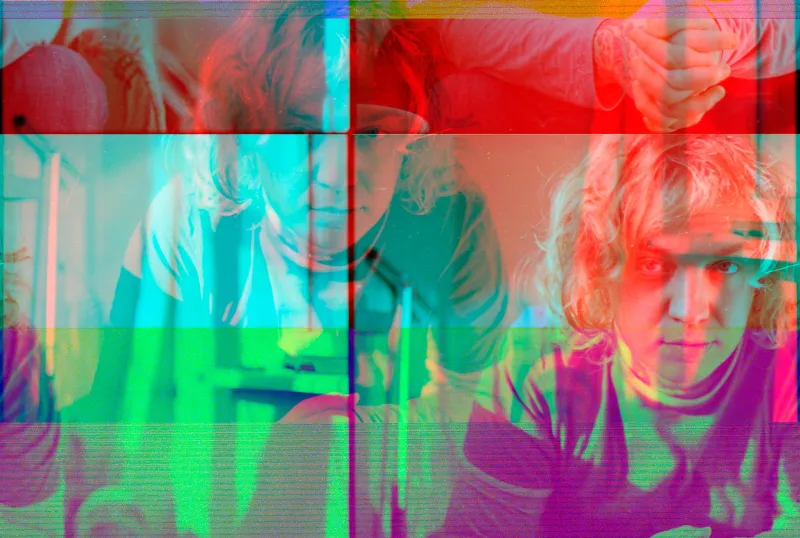
There's a specific kind of beauty that lives inside a broken JPEG. You know the one — where the image has partially failed to load and the bottom half has dissolved into horizontal streaks of electric color, the subject's face smeared into something between portrait and fever dream. Most people hit refresh. A growing number of young creators hit save.
Glitch aesthetics aren't new — artists have been poking at digital corruption since the early days of net art in the nineties. But something has shifted hard in the last few years. What used to be a niche experimental gesture has become a full-blown visual language, fluent across TikTok feeds, Instagram grids, fashion editorials, and album artwork. Gen Z didn't discover the glitch. They claimed it.
The Error Is the Message
Ask anyone deep in this scene why they're drawn to corrupted visuals and they'll tell you, with complete sincerity, that it feels more honest than anything else on their screen. That's not a throwaway line. There's something genuinely loaded in that answer.
We are living in the most aggressively smoothed-out visual era in human history. Skin retouching has become so algorithmic that apps do it automatically before you even ask. Filters flatten, brighten, and symmetrize. Every surface is optimized. Every image is, in some technical sense, a lie — and everyone under 25 has grown up knowing exactly how the lie is constructed.
The glitch ruptures that. A deliberately corrupted image admits what the polished one pretends doesn't exist: that the whole thing is built on code, running on machines, subject to failure. The error doesn't hide the artifice. It exposes it. And in exposing it, it feels — paradoxically — more real.
Creators like @void.render and @datamosh.daily on Instagram have built substantial followings doing nothing more than sharing images that look like they've been partially eaten by their own file format. The aesthetic runs from subtle — a face with one eye replaced by a cascade of RGB noise — to total, where the original image is almost unrecognizable beneath layers of digital disintegration. Both ends of the spectrum pull serious engagement. People are not confused by this content. They're moved by it.
Datamoshing, Pixel Sorting, and the New Toolkit of Beautiful Failure
The technical vocabulary of this movement is worth understanding because it's specific and intentional. Datamoshing — a technique that exploits video compression errors to make motion blur between frames in wild, painterly ways — produces footage that looks like the video is melting into itself. Pixel sorting takes an image and reorganizes its pixels by brightness or color value, dragging them into long horizontal or vertical smears that turn ordinary photographs into something that looks like a digital aurora borealis.
Neither of these techniques requires expensive software. A lot of the most striking work is being made with free tools, old laptops, and deliberate misuse of programs that were designed to do something else entirely. There's a DIY energy here that connects directly to punk and lo-fi traditions — the aesthetic of limitation worn as a badge rather than hidden as a flaw.
On TikTok, creators are running tutorials on how to introduce controlled corruption into video files by opening them in audio editors and resaving them — a technique called file bending or circuit bending for digital media. These videos get hundreds of thousands of views. People want to learn how to break things beautifully.
Perfectionism Is Exhausting and Everyone Knows It
The psychological dimension of all this is hard to ignore. We are living through what researchers are increasingly calling a perfectionism epidemic — anxiety driven by the constant visual comparison that social media enables and the impossible standards it circulates. The mental health conversation around filtered culture has been loud for years, but the response has mostly been aesthetic addition: more natural filters, "no makeup" makeup looks, "authentic" content that is still, obviously, curated.
Glitch aesthetics do something different. They don't try to approximate realness through better imitation. They reject the terms of the competition entirely. A pixel-sorted portrait isn't trying to look more natural than a retouched one. It's doing something the retouched image structurally cannot do: it's showing you the seams.
There's a generational exhaustion embedded in this choice. The creators driving this movement grew up watching older millennials pioneer the polished Instagram aesthetic, watched it curdle into something hollow, and decided the whole framework was broken. If the frame is broken, the argument goes, maybe the break is the frame.
Where It's Going
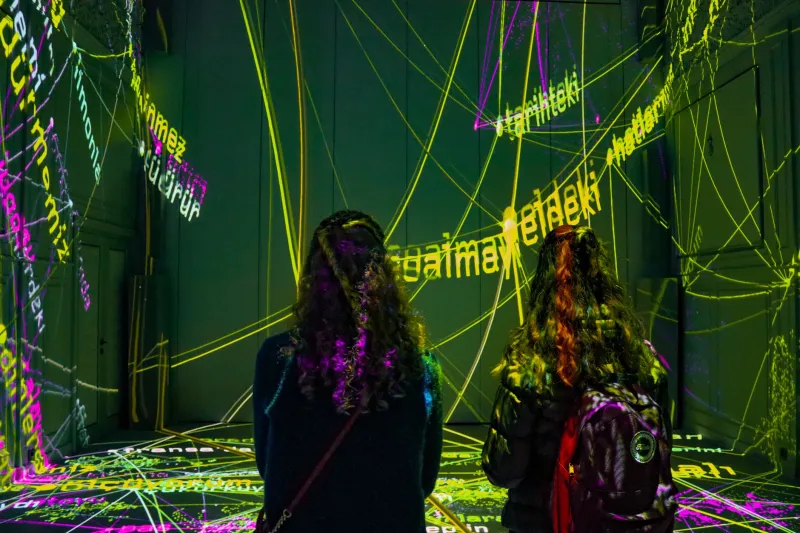
Glitch aesthetics have already started migrating off screens and into physical spaces. Fashion designers are printing corrupted imagery onto fabric. Tattoo artists are doing pixel-sort inspired work in ink. Gallery installations are running live datamosh loops on gallery walls in cities from Brooklyn to Los Angeles.
The commercial world is paying attention too, which is where things get complicated. When a mainstream brand starts deploying glitch visuals in an ad campaign — and they have, repeatedly — the question of what it means gets murkier. Can an aesthetic built on the refusal of polish survive being polished into a marketing asset?
The most interesting creators in this space seem unbothered by that question, or at least resigned to the cycle. The underground always feeds the mainstream eventually. The point isn't to keep the aesthetic secret. The point is to keep making things that feel true — broken, corrupted, flickering, and stubbornly, defiantly alive.