Nothing Is the Note: The Composers Weaponizing Silence Into Something You Can't Unhear
There's a moment in certain experimental tracks where the sound just... stops. Not fades. Not dissolves. Stops. And in that sudden void, something strange happens in your chest — a low-grade panic, a held breath, a hyper-awareness of the hum of your refrigerator three rooms away. That moment? That's not an accident. That's the whole composition.
Welcome to the world of silence architects — a loose, sprawling movement of composers, sound designers, and avant-garde producers who have decided that the most radical thing you can do with music right now is take most of it away.
The Ghost in the Room
John Cage dropped his famous 4'33" on the world back in 1952 and people lost their minds. A pianist sitting at a grand piano for four minutes and thirty-three seconds without playing a single note wasn't music, critics screamed. Cage, of course, said that was exactly the point. The piece wasn't silence — it was everything else. The coughs in the audience. The rain on the roof. The ambient drone of a world that never actually shuts up.
Seventy-plus years later, Cage's spiritual descendants are doing something far more deliberate with that inheritance. They're not just framing ambient noise — they're engineering negative space with the precision of a neurosurgeon. They know exactly where to cut, how long to hold the void, and what frequencies to strip away to make your brain start hallucinating sound in the gap.
It's a form of psychological manipulation that happens to be gorgeous.
The New Quiet Is Loud
Spend any time on experimental music forums, certain corners of SoundCloud, or the increasingly surreal algorithm pockets of YouTube, and you'll find a whole ecosystem of composers working in what some are calling "negative composition" — music built more around strategic absence than presence.
Producers like Grouper, Loscil, and the late Harold Budd have long operated in this territory. But the current wave goes further, stripping arrangements down to near-nothing and then sitting in that near-nothing for uncomfortably long stretches. Some tracks are ninety percent silence. Some are just a single recurring tone with massive, yawning gaps between each pulse.
The listener's brain, starved for pattern and resolution, starts doing the heavy lifting. It fills in harmonics that aren't there. It projects emotional content onto pure emptiness. You're not just hearing the music — you're hallucinating it. The composer has essentially outsourced part of the composition to your own nervous system.
That's not a bug. That is the entire feature.
Why Gen Z Is Obsessed With Music That Feels Like a Void
Here's the thing that makes sense once you think about it: a generation raised on constant, algorithmic stimulation is developing a deep hunger for its opposite. The same kids who grew up with autoplaying videos and infinite scroll feeds are the ones seeking out hour-long ambient compositions with titles like Room Tone Study #4 or After the Signal Drops.
There's a reason why lo-fi hip hop blew up. There's a reason why "study music" playlists routinely rack up hundreds of millions of streams. But the silence composers are going somewhere those formats don't — they're not providing comfortable background texture. They're forcing confrontation with emptiness.
It's less like meditation and more like sensory deprivation with better aesthetics. The discomfort is intentional. The anxiety the music induces is the point. Several composers in this space talk openly about wanting their listeners to feel the shape of the absence, to become aware of how much cognitive energy they normally spend processing sonic input without ever noticing.
Take away the noise, and suddenly you can feel the noise that used to be there.
The Technology of Nothing
This is where it gets genuinely weird from a production standpoint. Creating convincing, psychologically effective silence is technically demanding in ways that feel almost paradoxical. You can't just mute a track. The ear is too smart for that — it hears the difference between genuine acoustic space and a dead digital zero immediately.
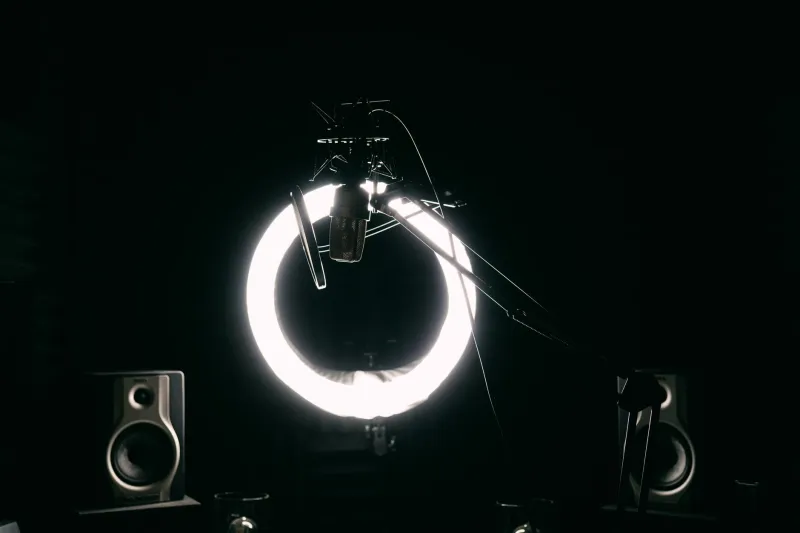
Silence composers spend enormous amounts of time on room tone, on the specific frequency signature of empty space, on what audio engineers call the "noise floor" — the almost-imperceptible hiss of a recording environment doing absolutely nothing. Some artists record in anechoic chambers and then meticulously re-introduce carefully chosen ambient frequencies to make the silence feel alive rather than dead.
Others work in the opposite direction, building dense, layered compositions and then surgically removing elements until only the skeleton of a sound remains — a process one Berlin-based producer described as "reverse sculpture, carving the music out of itself."
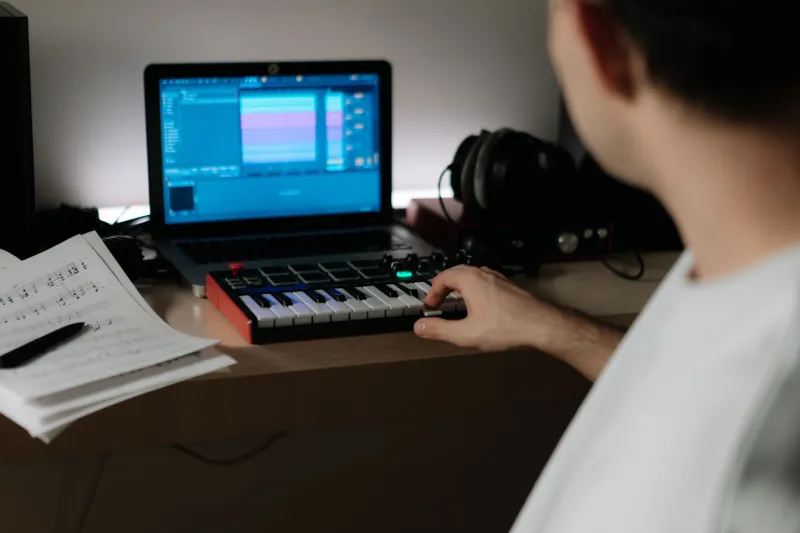
Software tools designed for silence are a growing niche. Certain DAW plugins now specialize in what they call "spatial absence modeling" — essentially tools for making nothing sound like something specific. The technology of quiet is, somewhat ironically, increasingly sophisticated.
The Anxiety Is the Art
What separates this movement from simple ambient music or lo-fi aesthetics is the willingness to let the listener be uncomfortable. Comfortable silence is a spa. What these composers are building is closer to a sensory pressure chamber.
The tension that builds in a long, deliberate pause — the one that makes you check your headphones to see if they disconnected — that tension is the emotional core of the piece. The composers are exploiting a deep neurological truth: the brain hates unresolved anticipation. It will assign meaning to literally nothing rather than sit with meaninglessness.
So when the silence stretches past the point of comfort, your brain starts writing its own music to fill the gap. You project dread, or wonder, or grief, or relief. You become a co-composer without being asked.
That's either a profound artistic collaboration or a very elegant con. Probably both.
The Void Sells, Actually
Somewhat against all commercial logic, this is also becoming a viable creative economy. Silence composers are getting sync licensing deals for film and television — turns out directors love music that makes audiences feel like something terrible is about to happen without actually telling them what. Meditation app companies are commissioning custom negative-space compositions. Some producers are selling limited-run digital releases of pure silence recordings, framed as conceptual art objects, and people are buying them.
The avant-garde, as it tends to do, has found a market by being so weird that the market eventually came to it.
What Cage understood in 1952 and what this generation is rediscovering with new tools and new urgency is that silence isn't the absence of music. It's music's most honest form — the shape that sound leaves behind when it finally gets out of its own way.