Concrete Hallucinations: The Architects Designing Cities That Mess With Your Head on Purpose
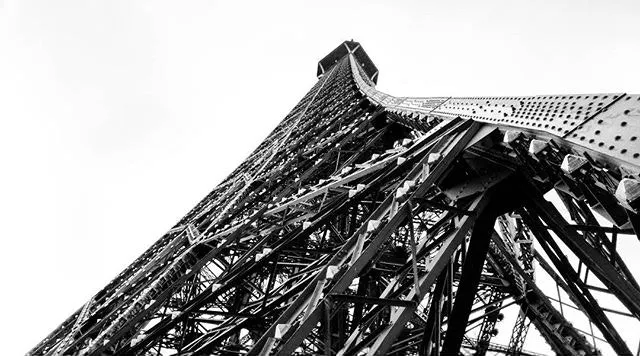
Photo: Collin M, CC BY 3.0, via Wikimedia Commons
You walk into a subway station and something feels off. Not bad, exactly. Just different. The ceiling curves in a way that pulls your eyes upward. The tiles shift from cool gray to a warm amber as you descend the escalator. There's a low, almost imperceptible hum that seems to come from everywhere and nowhere. You move faster without deciding to. You feel calmer without knowing why.
That wasn't an accident. Someone designed that experience down to the micron.
A growing movement inside architecture and urban planning is treating the city not as infrastructure but as a sensory instrument — one that can be tuned, distorted, and weaponized to reshape how human beings move through space, feel emotions, and make decisions. It's part neuroscience, part avant-garde art installation, and part something that doesn't have a clean name yet. Call it perceptual urbanism. Call it architectural synesthesia. Call it the most ambitious behavioral design project in human history.
Whatever you call it, it's already happening in cities across the US and around the world — and most people walking through these spaces have absolutely no idea.
The Building That Wants to Confuse You (For Your Own Good)
The traditional goal of architecture was clarity. Guide people efficiently. Signal function through form. Don't make anyone feel lost. But a newer school of thought flips that logic entirely. Disorientation, these designers argue, is actually a doorway — a crack in your autopilot mode that forces genuine awareness and presence.
Take the work coming out of firms experimenting with what some call haptic urbanism — design that deliberately activates touch, sound, and spatial perception simultaneously. In practice, this might look like a public plaza where the ground shifts between textures — smooth concrete, rough stone, soft rubber — creating a subconscious score for your feet that changes your walking pace and posture without a single sign telling you what to do. Or a transit corridor where sound-absorbing panels are placed asymmetrically, creating acoustic shadows that make certain spots feel intimate and others feel exposed, nudging crowds to distribute themselves more organically.
Researchers at institutions like MIT's Media Lab and the Salk Institute have been studying how spatial environments trigger neurological responses for decades. What's new is that architects are taking that research out of the lab and pouring it directly into concrete, glass, and steel.
Color as a Control Mechanism
If you've been to the new Moynihan Train Hall in New York City, you might have noticed something strange about the light. It doesn't behave the way light in a train station is supposed to behave. It's diffuse, almost theatrical, flooding down from the massive skylights in a way that makes the space feel simultaneously monumental and weirdly intimate. People slow down inside it. They look up. They linger.
That's a deliberate perceptual manipulation. The architects understood that warm, overhead natural light triggers a parasympathetic response — it literally calms your nervous system in a way that fluorescent overhead strips do not. In a space that's supposed to move thousands of anxious commuters efficiently, building in moments of involuntary calm is a radical design choice.
Some designers are going even further with chromatic programming — using color gradients across entire city blocks to subconsciously signal transitions between zones. Cool blues and grays signal commerce and efficiency. Warmer ochres and terracottas bleed in as you approach residential areas. The shift is subtle enough that you won't consciously register it, but your nervous system will.
It sounds psychedelic because it basically is.
Sound Architecture and the Invisible Walls
Here's a wild concept that's quietly becoming standard practice in high-end retail and public space design: acoustic zoning. Instead of physical barriers, designers use carefully engineered sound environments to create invisible boundaries that guide human behavior just as effectively as walls would.
A shopping district in development in Los Angeles is reportedly experimenting with directional audio installations that shift in frequency and texture as you move through different sections of the space. Jazz-influenced ambient sound in the restaurant corridor. Rhythmic, bass-forward tones near the fitness studios. Softer, more diffuse soundscapes in the boutique retail section. Your body responds to each zone differently — your pace changes, your attention shifts, your spending behavior adjusts — all without a single overhead announcement or wayfinding sign.
This is where the line between urban design and full-scale sensory art installation completely dissolves. And honestly? It's about time.
The Ethics of Being Steered
Let's not pretend this is all utopian. There's a legitimate conversation to be had about consent. When a city or a developer engineers a public space to steer your emotions and behavior through subconscious sensory triggers, are you a participant or a subject? The neuroscience is real. The manipulation is real. And unlike a cookie consent banner, there's no pop-up asking if you'd like to opt out of the immersive perceptual experience of walking through downtown.
Some designers are pushing for what they call transparent atmospherics — public disclosure of the perceptual design strategies embedded in shared spaces. Think of it like nutritional labeling for your built environment. This space uses acoustic dampening to reduce aggression. This plaza uses chromatic gradients to encourage lingering. You can debate whether that's reassuring or just more unsettling.
But others argue the entire critique misses the point. Architecture has always been behavioral design. The cathedral ceiling that makes you feel small and reverent. The open office floor plan that makes surveillance feel like collaboration. The highway overpass that physically separates neighborhoods. These were never neutral choices. At least the new wave of perceptual designers is doing it with awareness — and increasingly, with the goal of creating spaces that feel genuinely alive.
The City as a Living Art Piece
What's most exciting — and most Untwisted Vortex — about this whole movement is that it's collapsing the boundary between art and infrastructure in a way that might be permanent. The most interesting urban designers working today aren't just engineers or planners. They're collaborating with sound artists, neuroscientists, experimental filmmakers, and synesthetic musicians to build environments that function like immersive installations you happen to also commute through.
There are cities being designed right now where the architecture isn't just responding to human behavior — it's trying to create new kinds of human behavior. Spaces engineered to make strangers talk to each other. Corridors designed to trigger memory. Plazas tuned to produce a specific emotional texture at dusk.
The city, in other words, is becoming a canvas. And the paint is your nervous system.
Next time you walk into a space and feel something you can't quite name — that low hum of presence, that inexplicable urge to slow down, that strange sense that the room is breathing — don't dismiss it. Someone put that there for you. The question is whether you want to notice the architecture noticing you back.