Cross-Wired: How Brands Scramble Your Senses on Purpose — and What to Do When You Notice
There's a moment — you've probably had it — where you walk into a store or open an app and something just feels right. You can't explain it. The air smells faintly of something warm. The lighting is doing something to the color of everything. A low, barely-audible tone hums under the ambient music. You pick up the product. You buy the thing. You leave.
You were never in control of that decision. Not fully.
Welcome to the deliberately tangled architecture of sensory marketing — a field that has quietly evolved from "nice atmosphere" into something far more calculated, far more neuroscience-forward, and frankly, far more unsettling than most consumers realize.
The Bleed Between Senses Is the Point
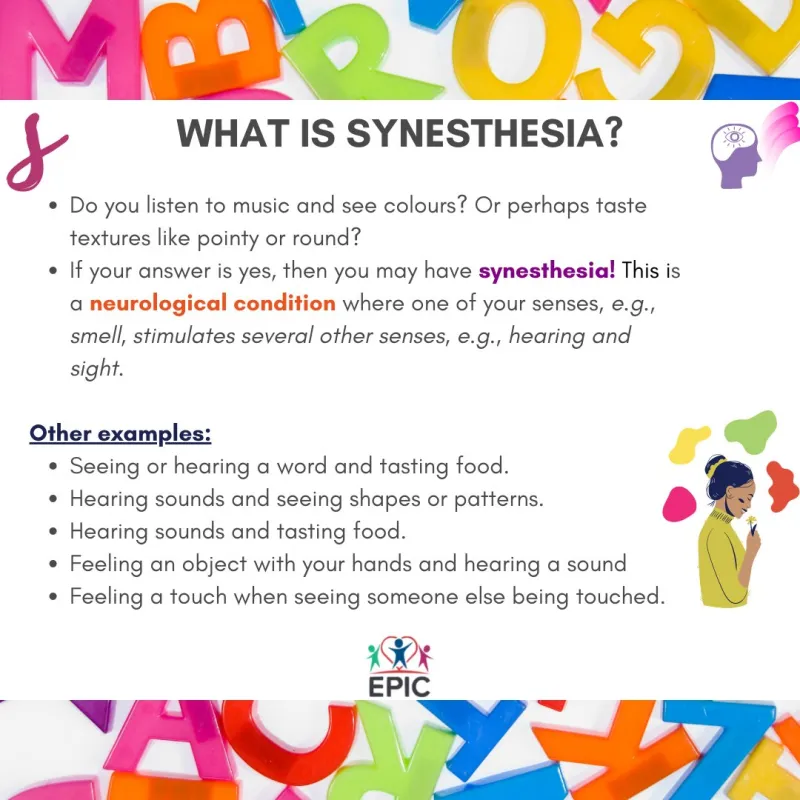
Synesthesia, in its natural form, is a neurological phenomenon where one sensory input involuntarily triggers another — you hear a trumpet and see a flash of orange, you read the number seven and taste something metallic. It's rare, it's fascinating, and for decades it lived mostly in neuroscience journals and artist manifestos.
Brands noticed.
"What synesthesia revealed is that sensory channels in the brain aren't as isolated as we used to think," explains Dr. Renata Solís, a cognitive neuroscientist at a research university in Chicago who has consulted for both academic institutions and, she admits with a wry pause, several Fortune 500 companies. "Once marketers understood that you could use one sense to prime or amplify another, the whole game changed. You're not just designing a smell. You're designing what the smell makes someone see."
This cross-channel priming is the foundational trick. A luxury retailer doesn't just pipe in a pleasant scent — they select a scent whose chemical profile activates the same neural pathways associated with warmth, safety, and social status. Pair that with cool-toned lighting that makes gold and cream surfaces glow slightly brighter, and you've created a sensory environment that whispers expensive without saying a single word.
The App That Sounds Like Money
This isn't just a brick-and-mortar phenomenon. Digital spaces have gotten just as sophisticated, and in some ways more insidious, because the manipulation is invisible in a context where people already expect to be surveilled.
Marcus Trent spent eight years as a UX strategist for a major fintech company before leaving to consult independently. He's candid about what he built. "We A/B tested notification sounds the same way a perfumer tests scent profiles," he says. "We weren't just looking for something that felt satisfying. We were looking for a tone that made the numbers on screen feel more real, more significant. There's research showing that certain frequencies make visual information feel more credible. We used that research."
The result: the little chime your banking app plays when a transaction clears isn't random. It's been tuned — literally, in terms of frequency — to make the dollar amount on your screen feel more concrete, more positive, more yours. Meanwhile, the haptic buzz your phone gives when you complete a purchase in a shopping app has been engineered to feel like a small physical reward, not a confirmation of money leaving your account.
"We called it 'sensory alignment,'" Trent says. "Internally. Never in front of clients, because it sounds clinical. What it actually is, is emotional redirection."
The Smell of Status and the Sound of Safe
Retail spaces, especially luxury ones, have turned scent into architecture. Abercrombie's aggressive cologne-bombing of the 2000s was a crude early version of this — memorable, sure, but blunt. Contemporary luxury brands operate with far more precision.
Solís describes a study her lab ran in partnership with a high-end fashion retailer (she can't name them, per NDA). They tested three scent profiles across identical store layouts. The profile that combined subtle cedar, white musk, and a trace of something floral didn't just make shoppers linger longer — it measurably changed how they perceived the quality of the clothing. "People handling the same garment in the scented condition rated the fabric as softer and the stitching as finer," she says. "The product hadn't changed at all. Their sensory context had."
Sound operates similarly. The tempo of background music in retail environments is one of the most-studied variables in consumer psychology, and brands have long known that slower tempos increase dwell time. But the newer frontier is texture of sound — the specific timbral qualities that make a space feel intimate versus grand, exclusive versus accessible. Apple Stores, for instance, maintain a particular acoustic signature: hard surfaces that create a clean, slightly reverberant sound that subconsciously codes as modern and precise. That's not accidental architecture. That's intentional.
How to Actually Catch It Happening
So what do you do with this information? The goal here isn't paranoia — it's perceptual literacy. The vortex of cross-sensory manipulation doesn't have to be one you spiral into without noticing.
A few things that cognitive scientists and former brand insiders actually recommend:
Pause at the threshold. When you enter a physical retail space, take five seconds before engaging with any product. Notice what you're smelling, what you're hearing, how the light feels. Naming these inputs consciously activates the prefrontal cortex — the rational-decision part of your brain — and creates a small but meaningful buffer between sensation and action.
Mute the experience. In digital spaces, turning off notification sounds and haptic feedback strips away one of the most powerful sensory levers. Trent acknowledges this directly: "If you're buying something in an app and your phone is on silent, you are genuinely making a more rational decision than if the sound is on. I've seen the data."
Ask the weird question. When something in a store or app environment makes you feel unexpectedly good, ask yourself: what specifically is generating this feeling? Trace it back to its source. Is it the product? Or is it the temperature, the music, the way the display is lit? Disaggregating the feeling from the object is a skill, and it gets easier with practice.
Trust friction. Environments designed to manipulate your senses are almost always also designed to minimize friction — easy checkout, seamless navigation, no awkward pauses. Friction, in these contexts, is actually your friend. Slow down. Read the thing. Put it back and come back tomorrow.
The Art of Perception Is Political
Here's the part that doesn't get said enough: the same neuroscience that makes sensory manipulation possible is also the neuroscience that makes art transformative. The reason a great painting or a perfectly mixed record can crack you open emotionally is the same reason a carefully engineered retail environment can make you spend $400 on a candle.
The difference is consent, and intention.
Artists who work in immersive or synesthetic modes — and there are extraordinary ones doing this right now — are generally trying to expand your perception, to give you access to experiences you couldn't have otherwise. Brands are trying to narrow it. To funnel it toward a single, profitable outcome.
Knowing the difference between those two projects is, in some ways, the defining perceptual challenge of being a consumer in 2025. The vortex is real. But you can learn to see its shape before it pulls you under.