Gravity Is a Suggestion: Meet the Photographers Making Landscapes Swallow You Whole
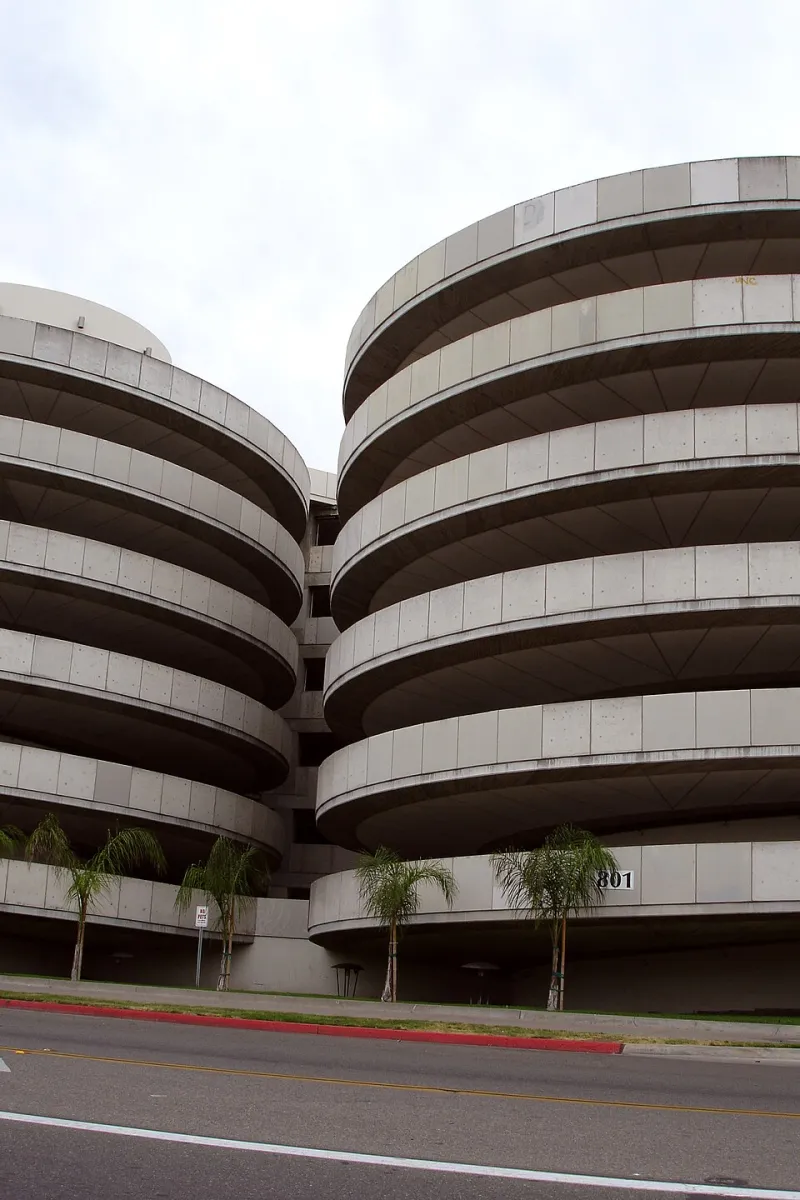
Photo: Omar Bárcena, CC BY 2.0, via Wikimedia Commons
There's a photo making the rounds again on every feed this season: a highway stretching into the desert, shot from dead center, spiraling gently inward until the horizon seems to tilt and swallow itself. Your stomach drops. You scroll back up. You look again.
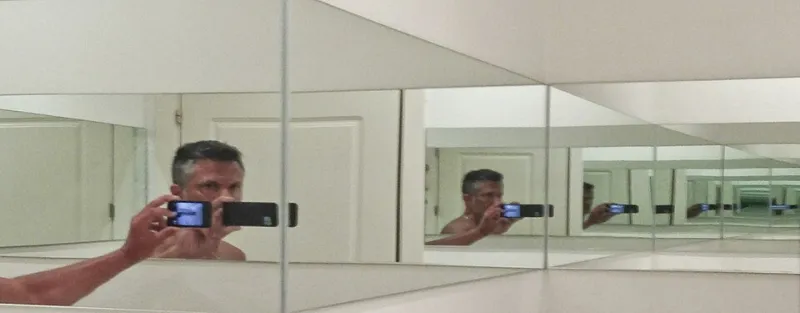
That reaction — the half-second where your inner ear files a complaint — is the entire business model of a loose collective of photographers who've been quietly taking over gallery walls from Marfa to Portland. They call it vertigo work. Critics have started calling it vortex photography. Either way, the flat image stopped being a window a long time ago. Now it's a trapdoor.
The Moment the Ground Gives Way
Ask anyone who's stood in front of one of these prints at the right size and they'll describe the same thing: a lurch. Not metaphorical. A genuine, vestibular hiccup, as if the floor of the gallery tilted two degrees.
That's not an accident. It's optics weaponized.
The trick relies on what perception researchers call vection — the same phenomenon that convinces you your car is rolling backward when the truck next to you creeps forward. Your visual system uses converging lines, texture gradients, and motion cues to build your sense of up and down. Stack enough of those cues into a spiral and the brain's scaffolding starts to creak.
Photographers figured out decades ago that one-point perspective shot from a great height could produce a mild version of this. What's changed is the toolkit. Drone spirals — flying a camera in a tightening orbit directly over a subject — create a rotational pull that no tripod ever could. Long exposures through tunnels, stairwells, and atriums smear the architecture into something closer to a whirlpool than a room.
Three Americans Chasing the Drop
Marisol Vega, New Mexico shoots the desert the way other people shoot oceans. Her series of drainage tunnels and mining shafts outside Socorro uses a slow 30-second exposure while rotating the camera a few degrees mid-frame. The rock walls blur into a churning funnel, and the tiny rectangle of light at the far end becomes the only fixed point — a pinhole of daylight at the bottom of the drain. She told me she thinks of the prints as "postcards from the inside of a dizzy spell."
Devin Okafor, Chicago works the opposite direction: up. His ongoing project shooting straight down the city's parking garages, elevator shafts, and the Sears-adjacent towers tourists ignore has become the movement's calling card. Shot from the top floor of a nine-story parking structure, his image of a spiral ramp looks less like architecture and more like a nautilus shell someone poured concrete into. Collectors noticed. His last print run sold out in a weekend.
June Park, coastal Oregon is the movement's traditionalist, refusing to fly anything. Her fog-drenched forest images use forced perspective — a fallen log in the foreground, a receding trail behind it, the camera inches from the ground — to compress dozens of yards of forest into what looks like a single collapsing plane. Viewers swear the trees are leaning. They aren't. You are.
Why Now?
Part of the appeal is obvious: these images perform. Social platforms reward the double-take, and a photo that makes you physically flinch gets shared whether the caption says anything or not.
But there's something deeper going on. We live inside screens that promised us windows and delivered mirrors. A photograph that destabilizes you — that makes the act of looking feel like an event with consequences — feels almost transgressive in 2024. It's the visual equivalent of a rollercoaster in an era of escalators.
Galleries have caught on. Vertigo prints now anchor solo shows in Los Angeles and Brooklyn, and print shops report buyers specifically asking for pieces "that move." The images are still. Your eyes are the problem.
Your First Vortex, No Drone Required
Here's the good news: the entry fee is basically zero. You need any camera — a phone qualifies — and a location with strong converging lines.
1. Find your funnel. Parking garages, stairwells, tunnels, long empty hallways, escalators (shoot from the top, safely), even a spiral staircase viewed from below. If the lines converge, you're home.
2. Kill the horizon. The fastest way to create vertigo is to remove the viewer's anchor. Frame the shot so there's no visible horizon line at all — just lines rushing toward a vanishing point.
3. Get low or get centered. Either shoot dead-center down the axis of the space, or drop the camera to ankle height for forced perspective distortion. Both disorient; they just disorient differently.
4. Slow it down. If your space is dim, a longer exposure (even half a second handheld-braced against a rail) will smear the edges while keeping the center sharp. That contrast between blur and focus is where the pull lives.
5. Rotate on purpose. Advanced move: during a long exposure, twist the camera a few degrees. The result is a gentle corkscrew that costs nothing and looks expensive.
6. Print it big. A vertigo image on a phone is a curiosity. The same image at 30 inches wide is an experience. The scale is half the illusion.
The first time you review a shot and feel your own stomach register a polite objection, you'll understand why this movement exists. The photograph didn't move. You did — just slightly, just enough.
Which, if you think about it, is the whole point of art that calls itself a vortex. It doesn't pull you in. It convinces you that you were already falling.