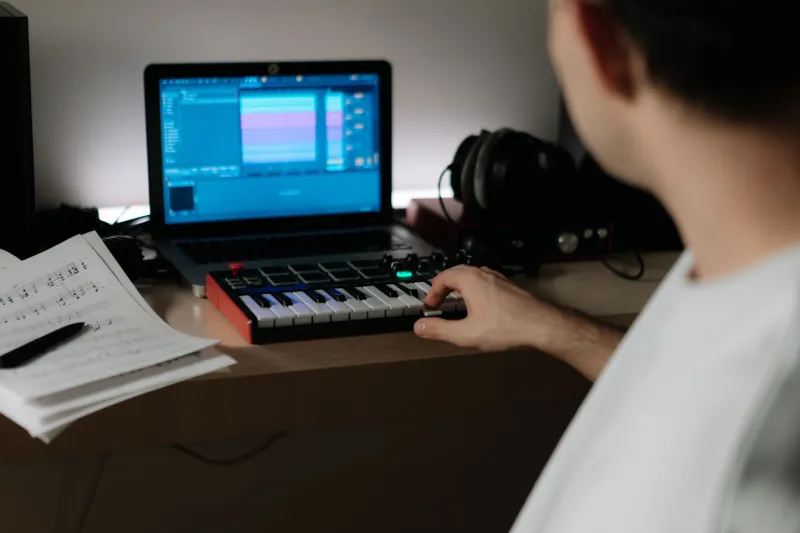
Frequencies on the Fork: The Rogue Chefs Ditching Flame for Sound Waves
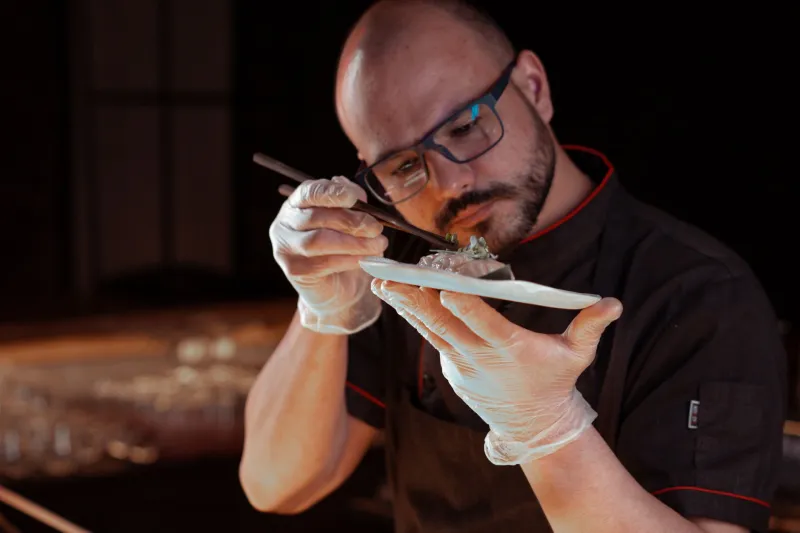
Close your eyes. Imagine biting into a wedge of lemon — except there's no lemon. There's a bowl of lukewarm rice and a pair of headphones pumping a 40Hz drone into your skull. And somehow, against every rational instinct you have, your mouth floods with citrus.
Welcome to the part of the culinary world that doesn't show up on Yelp.
Somewhere between neuroscience and performance art, a loosely connected movement of chefs, sound designers, and flavor-obsessed weirdos is quietly dismantling the idea that cooking is about ingredients. For these people, the real kitchen is the human nervous system — and sound is the most underrated spice on the shelf.
The Science Behind the Madness
This isn't pure mysticism. Psychologist Charles Spence at Oxford has spent years demonstrating that what we hear while we eat fundamentally changes what we taste. High-pitched tones make sweetness bloom. Low, rumbling frequencies push bitterness forward. His famous "sonic seasoning" experiments showed that the same piece of toffee could taste measurably sweeter or more bitter depending solely on the sound playing in the background.
But the underground chefs operating out of converted warehouses in Brooklyn, basement pop-ups in Chicago, and retrofitted shipping containers in the Bay Area aren't just playing background music. They're going several layers deeper — using binaural beats designed to shift brainwave states, ultrasonic transducers mounted beneath dining tables to vibrate food at the molecular level, and carefully engineered synaesthetic environments where color, light, and tone are all calibrated to prime the nervous system before a single bite lands.
The goal isn't ambiance. The goal is full neurological override.
Meet the Operators
Take the collective operating under the name Mouthfeel Ghost out of Portland, Oregon. They don't have a restaurant — they have an email list. Dinners are announced 72 hours in advance, held in rented industrial spaces, and capped at 14 guests. Each diner receives a custom frequency profile before the meal — a 20-minute audio session delivered via app that's meant to "tune" their auditory cortex to the evening's flavor palette.
The food itself is deliberately simple. Think: plain steamed vegetables, unseasoned broth, a few slices of unadorned bread. The complexity comes entirely from what's happening in the room — a layered sound installation shifting between 528Hz tones (long associated in fringe science with emotional resonance) and deep sub-bass pulses that diners feel more than hear.
Guests consistently report tasting umami where none exists. Sweetness in savory things. A lingering, almost floral aftertaste that disappears the moment the sound cuts out.
"We're not cooking food," says one of Mouthfeel Ghost's founders, who goes by Cass and declined to give a last name. "We're cooking perception. The food is just the surface."
Ultrasound in the Kitchen
On the more technologically intense end of the spectrum, a small number of culinary experimenters are working with ultrasonic frequencies — sound waves above the range of human hearing — to physically alter food texture and flavor release. Ultrasonic processing has legitimate industrial food science applications: it can accelerate fermentation, break down cell walls, and alter emulsification. But using it at the dinner table, in real time, as a kind of invisible seasoning? That's a different conversation entirely.
A chef based in Austin — who runs a supper club out of their home and asked not to be named — has built a custom rig using ultrasonic transducers sourced from industrial cleaning equipment. Mounted beneath a custom-built dining table, the transducers send vibrations through the surface, through the bowls, and into the food and liquid sitting in them. The effect on taste is subtle but verifiable: wine opens up differently, textures shift, and certain bitter compounds seem to soften.
"It's like aeration but invisible," they explain. "You're not changing the chemistry — you're changing the moment of encounter between the food and your mouth."
Synaesthesia as a Design Brief
For many of these culinary rebels, synaesthesia — the neurological phenomenon where one sense involuntarily triggers another — isn't a curiosity. It's a design philosophy.
If color can be heard, and sound can be tasted, then a meal is really just a multi-channel signal that hasn't been fully engineered yet. Several chefs in this space are working directly with synaesthetes as consultants, mapping their cross-sensory experiences to create dining environments calibrated to produce specific perceptual crossovers in non-synaesthetic guests.
The results are unpredictable, deeply personal, and occasionally overwhelming. Reports from diners describe synced moments where a shift in the room's ambient tone made a dish suddenly taste "purple" or "angular." One account from a pop-up in Los Angeles describes a guest who started laughing uncontrollably during a broth course because it "smelled like a C-sharp."
This is the untwisted vortex of it: the line between eating and experiencing dissolves entirely.
Why This Matters Beyond the Dinner Table
It would be easy to write this off as precious avant-garde theater for people with too much disposable income and not enough conventional dinner plans. But the implications reach further than that.
For people with altered taste perception — cancer patients undergoing chemotherapy, individuals with anosmia, aging adults whose flavor sensitivity has declined — sonic seasoning offers a genuinely compelling therapeutic angle. If you can restore the experience of flavor without relying on the damaged sensory pathway, that's not a gimmick. That's medicine adjacent.
Spence's research has already attracted interest from major food corporations looking to reduce sodium and sugar content by compensating perceptually through sound design. The underground chefs are arriving at the same destination from the opposite direction — not to sell more product, but to blow the whole concept of "product" wide open.
The Kitchen Is Everywhere Now
What these chefs are really doing — whether they frame it this way or not — is expanding the definition of where cooking happens. The kitchen isn't the stove. It's not even the room. It's the nervous system of the person eating, and it's been sitting there, fully programmable, the entire time.
The ingredients were never the point. They were always just the excuse to get you to sit still long enough to be rewired.
Next time someone tells you a meal was "unforgettable," maybe ask what frequency it was in.