Immersive Means Nothing Now. Here's a Better Vocabulary for Art That Actually Wrecks You
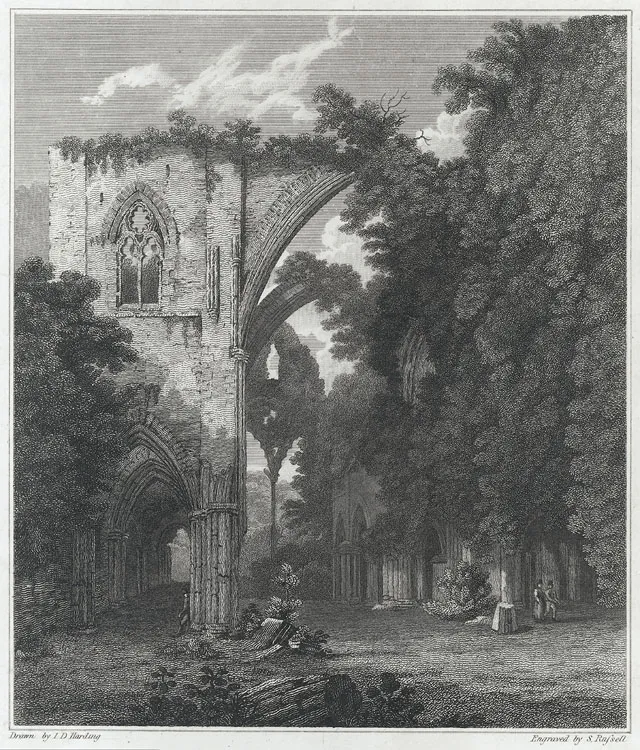
Photo: Samuel Russell, Public domain, via Wikimedia Commons
You bought a ticket to something described, in bold, as immersive. You walked through a curtain. There were fairy lights in a birch grove made of PVC. A mirror ball turned slowly overhead. Somewhere, a cover of a Fleetwood Mac song played at a volume that made conversation easy. You took four photos and left in under twenty minutes, and on the drive home you couldn't remember a single thing about it except the parking situation.
That's not a review of one show. It's the whole category now.
A Very Short History of a Very Stretched Word
Immersive theater had a real meaning once, and it was a good one. You moved through a space rather than sitting in it. The narrative happened around you, sometimes to you, and it did not wait for you to catch up. When Punchdrunk brought that model to New York in 2011 with a masked, wandering production inside an old hotel, the word became a selling point for something genuinely unnerving: an evening where you might be alone in a room, breathing hard, unsure whether you were supposed to be there.
Then the projection shows arrived. Then the digital art collectives with their mirrored floors and responsive light fields. Then a permanent Santa Fe outpost of surreal rooms. Each of these was, at minimum, interesting. But the word traveled faster than the work did, and somewhere around the point when a hotel lobby in a midsize city started calling its carpet 'an immersive arrival moment,' the term stopped describing art and started describing a marketing posture.
Now it's on brand activations. It's on salad chains. It's on a two-story walk-through in a strip mall next to a mattress store, and it cost $54, and children were screaming in it.
What the Word Actually Promises
Here's the tell: 'immersive' promises absorption without cost. It says you will be surrounded, delighted, transported — but never confused, never bored, never physically uncomfortable, never asked to give up anything. It is engineered for the photograph. It is, structurally, an Instagram backdrop with a ticket window.
Which would be fine if it were honest about it. Immersive is not a lie. It's a hedge. It flattens the difference between a show that wraps you in pleasant visuals and a show that rearranges your sense of where your body ends.
The Friction Test
When someone pitches you an 'immersive experience,' run three questions.
Does it require anything of me? Real disorienting work usually does — a mask, a timed entry slot, a commitment to stay for ninety minutes, a rule you have to follow, a corridor that makes you duck.
Can it be photographed well? If the answer is yes and the photo is the point, you're buying decor.
Will anyone in the room be uncomfortable? Not unsafe. Uncomfortable. Genuinely strange work produces at least one person who wants out. Work that flattens into mush is engineered so that no one ever does.
Words That Still Do Work
Disorienting. Not the same thing as pleasing. Something that messes with your proprioception, your sense of time, your confidence about where the exit is.
Durational. The piece is long and it stays long. You cannot consume it in twenty minutes. Your feet hurt. This is a feature.
Site-specific. Meaning it cannot be moved without becoming a different, worse thing. Meaning the loading dock, the humidity, the smell of the old carpet are all part of the material.
Participatory, not interactive. Interactive means you wave at a sensor. Participatory means you are on the hook — your presence changes what happens to other people in the room, and you can't opt out halfway.
Hostile. In the architectural sense. The work is not neutral toward your body. It has opinions about the width of the doorway.
Unrecoverable. It happened, at that hour, with those people, and there is no recording that will ever get it back. The avant-garde understood this a century ago and has been shouting it ever since.
They Will Steal These Words Too
Sure. Give it four years and a real estate developer will be advertising 'a hostile arrival sequence' in a luxury tower lobby. Language gets eaten; that's the business we're in.
But the theft is revealing. Every time a term migrates into marketing, it leaves a residue of meaning behind — and that residue is where the actual work lives. 'Immersive' didn't get ruined by artists. It got ruined by the desire to make experimental art safe enough to sell to a family of four on a Saturday.
What to Ask For Instead
Ask what happens if you hate it. Ask whether you can leave in the middle, and whether leaving ruins it. Ask who made it and what they're paid and whether the space was designed around the exit signage or around the shot.
And when something is genuinely strange — when you leave with your ears ringing and no usable photos and a mild sense of grievance — call it strange. Not immersive. Strange is a compliment. We should start using it that way again.