Sounds Better Broken: The $200 Cassette Economy and the Cult of Flawed Audio
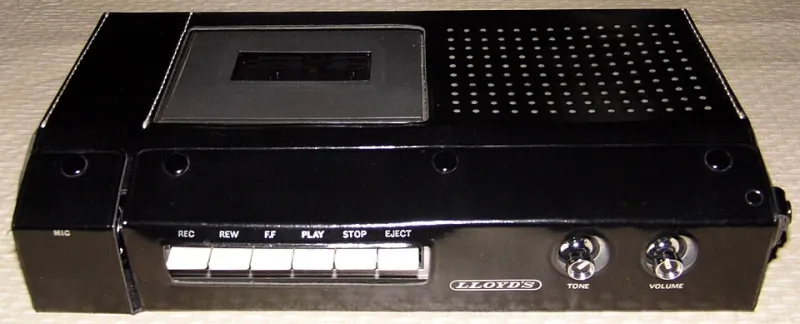
Photo: Joe Haupt from USA, CC BY-SA 2.0, via Wikimedia Commons
Let's get the heresy out of the way first: cassettes sound bad. Objectively, measurably, undeniably bad. The tape hisses. The highs roll off like they got tired. Left in a hot car, your favorite album develops a wobble that turns the drummer into a drunk.
Millennials know this. They're paying $200 anyway.
Cassette sales posted their strongest numbers in years through 2024, riding a wave alongside vinyl's improbable third act, and the underground tape economy has gone with it. Limited runs of 50 sell out in minutes on Bandcamp. Thrift-store soundtracks — warped VHS recordings, answering machine cassettes, expired meditation tapes — trade in collector circles for prices that would've gotten you laughed out of the Goodwill bin a decade ago.
The question isn't whether this is happening. It's why.
Flawlessness Is Free. Therefore Worthless.
Here's my thesis, and I'll defend it: when perfection became the default, imperfection became the signal.
Streaming handed every American a jukebox with 100 million songs, all mastered within an inch of their lives, all delivered in identical, frictionless, characterless clarity. Every track sounds like every other track in the sense that none of them sound like anything. The medium vanished so completely that we stopped hearing media at all.
A tape loop refuses to vanish. It hisses. It flutters. It announces itself as an object passing through time. When you pay real money for a cassette of ambient music that sounds like it was recorded inside a washing machine, you're not buying the audio. You're buying the evidence that a human being made a thing, and that the thing can die.
Scarcity does the rest. A stream is infinite; a tape run of 40 is not. Economics 101 meets art school and they get a room.
The Broken-Media Canon
If you want in, the rabbit hole goes deep. Here's where the heads are digging.
Ten labels and soundtracks worth hunting:
- Orange Milk Records (Ohio) — experimental tape runs with artwork that's worth the price before you press play.
- Dinzu Artefacts (Los Angeles) — field recordings and sound art in packaging that treats the cassette like a gallery object.
- Past Inside the Present (Michigan) — ambient and drone, gorgeous J-card design, sells out fast.
- Constellation Tatsu (Bay Area) — the long-running zen-garden of the tape world.
- Haord Records — raw, weird, sometimes unlistenable, always committed.
- Thrift-store VHS soundtracks — grab any pre-1995 exercise tape, nature documentary, or self-help cassette. The background music on these is unlicensed, anonymous, and frequently haunting. Collectors are sampling this stuff into entire albums.
- Answering machine and voicemail tapes — the found-sound frontier. Deeply strange. Deeply human.
- Expired media from estate sales — church choir recordings, high school jazz band sessions, someone's honeymoon travelog with a radio bleeding through. Nobody's competing with you on these yet.
- Nightschool-style micro-labels — dozens of one-person operations pressing 25 copies at a time. Follow the artists, not the brands.
- Your own recordings — the final boss of the movement. Record a mixtape off your own streaming service onto a used tape. Congratulations: you've manufactured scarcity in your own bedroom.
The Vortex Theory of Bad Sound
Here's the part that matters to us at Untwisted Vortex: degraded media is a reality distortion you can hold.
A warped tape doesn't just play a song. It bends it — pitch drifts, dropouts swallow syllables, the stereo image collapses and reassembles. Your brain, which desperately wants the song to be the song, keeps filling in the gaps. You're not passively listening. You're co-producing, every second, in real time.
That's the same perceptual trick behind every hallucination and illusion we cover on this site: give the mind an incomplete world and watch it build the rest. Streaming gives you nothing to complete. A chewed-up tape loop gives you a half-ruined world and dares you to finish it.
Is it convenient? God, no. Is it a status symbol? Obviously — the $200 price tag is the point, the same way a ripped hoodie at a luxury boutique is the point. But underneath the flexing there's something sincere: a generation raised on infinite, flawless, forgettable audio choosing to love something that crackles, decays, and won't last.
Which is a pretty good description of everything else they're trying to hold onto.