The Building Breathes in B-Flat: Inside the Scene Mic'ing Empty Offices and Playing Them Like Instruments
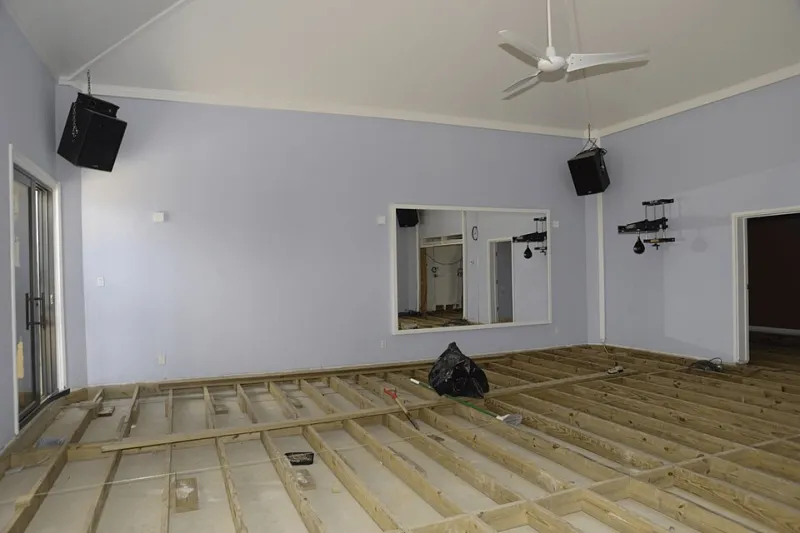
Photo: Federal Bureau of Investigation, Public domain, via Wikimedia Commons
At 2:40 on a Tuesday morning in a half-empty 1974 office tower in Cleveland, a woman in noise-cancelling headphones presses a contact microphone against a chilled-water pipe like a doctor hunting for a heartbeat. She isn't diagnosing anything. She's waiting for the seventh floor's variable air volume box to open its damper — every eleven minutes, regular as a metronome — because when it opens, the pipe sings. A low, sour, unexpectedly beautiful B-flat that has been sitting inside this building for fifty-two years, waiting for someone to point a microphone at it.
She and her partner perform as Hollow Core, and for the last eight months they've had an entire floor to themselves while a developer works out how to turn thirty floors of abandoned cubicles into 340 apartments. The rent is negligible. The catch is that the building is an active construction site, the elevators are padlocked, and the piece they're building will be obsolete the moment the first tenant flips a light switch.
They know the deal. The instrument dies the day the residents move in.
The Building Already Has a Pulse
Most people hear an office building as silence. It isn't. It's a racket you've been trained to filter out: the 60-hertz hum of electrical distribution, its 120-hertz harmonic riding on top like a bad tooth; the broadband hiss of air shoved through galvanized duct at 1,200 feet a minute; the water hammer in the risers when someone three floors down flushes; the traction motor of an elevator groaning through its sheave; the groan-and-clack of a standpipe expanding against its hangers as the afternoon sun hits the west face.
To sound artists, that's not noise. That's an orchestra with a terrible agent.
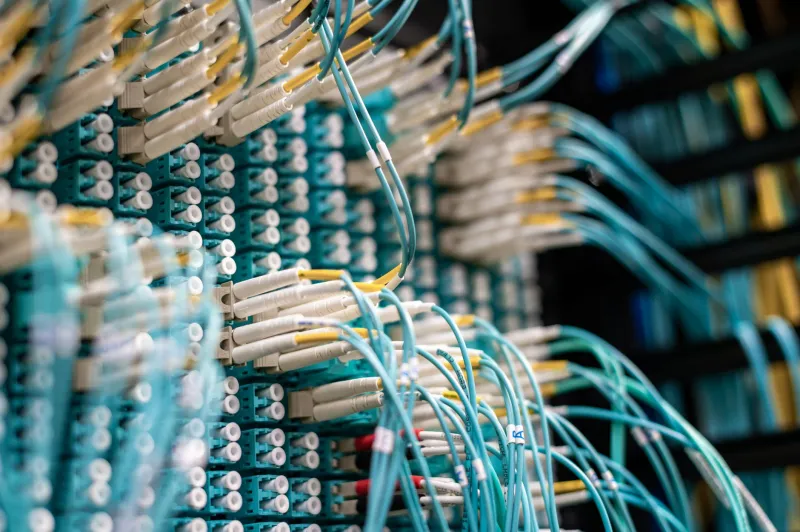
The toolkit is unglamorous. Contact mics gaffer-taped to ductwork. Hydrophones dropped into drain lines. Piezo discs clamped to handrails. Accelerometers bolted to pump housings. Then a laptop, a cheap interface, and a granular synth patch that stretches a two-second damper click into a ninety-second cloud of gravel. Capturing the sound is easy — anyone with a $30 mic can do that. The real skill is learning the building's schedule. Which floors run their air handlers at 5 a.m. Which elevator the security guard takes at 10:15. Where the resonant nodes hide, the corners where a hallway stops being a hallway and becomes a chamber with opinions.
A well-tuned duct behaves like a pipe organ. A badly tuned one behaves like a pipe organ with a grudge, which is arguably better art.
The Gut Interval
Here's what makes this a 2026 story. American downtowns are sitting on tens of millions of square feet of underused office space, and cities from Chicago to Cleveland to Pittsburgh to Norfolk have spent the past few years rewriting zoning to let developers carve it into apartments. Whether every conversion pencils out is a fight for the accountants. What's not in dispute is the strange, temporary state a building passes through on the way — the gut interval, that eighteen-to-thirty-month window after the last tenant leaves and before the first resident arrives.
During the gut interval, a building's mechanical system runs nearly empty. Nobody flushing. No printers, no breakroom microwaves, no sixty people talking over the air handler. The signal-to-noise ratio is the best it will ever be. The ducts are still there. The elevators still run, if you have the key. And the whole nervous system is basically unsupervised.
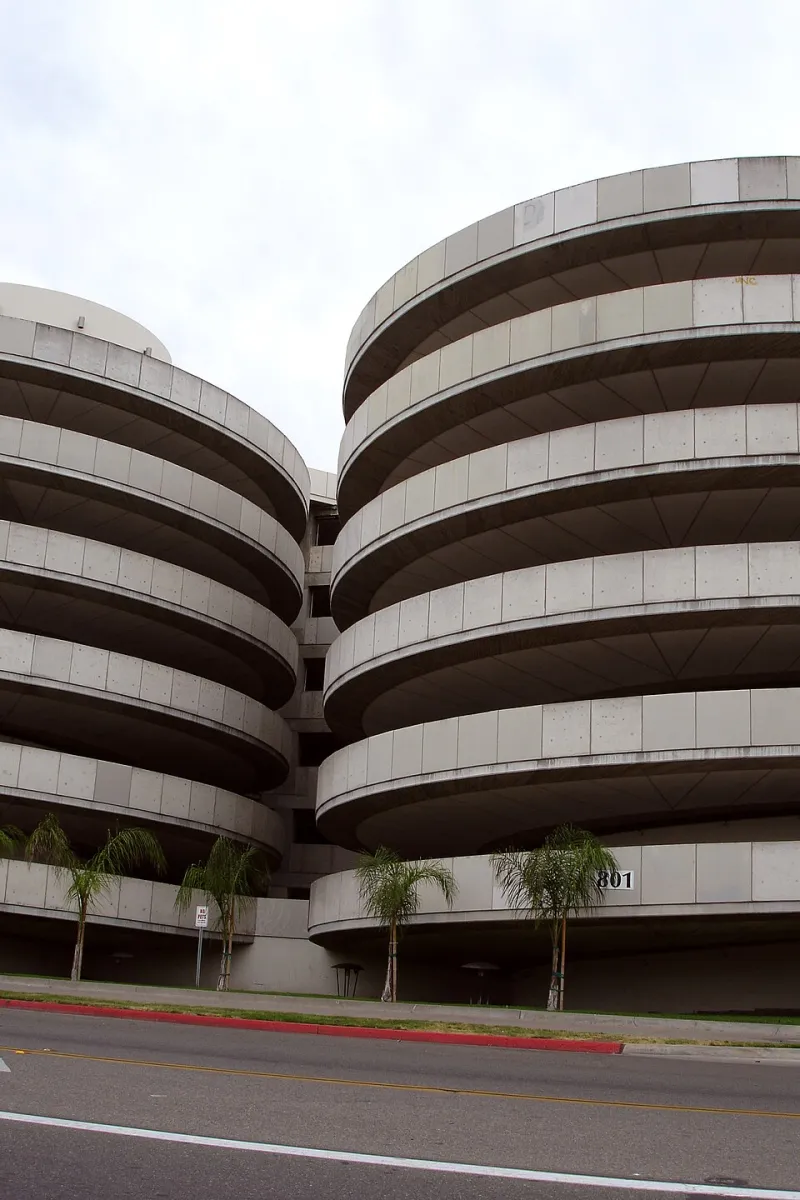
That's the recording window, and a small, determined scene has learned to live inside it. In Chicago, a trio has been mapping the HVAC of a 22-story Loop tower slated for conversion and releasing one track per floor — the ninth floor is a keeper, all rattling diffusers and a subsonic rumble from the chiller plant. In Pittsburgh, an artist has rigged a hydrophone to a fishing line and lowered it into the plumbing of a shuttered department store, producing long oceanic drones that sound like whale song filtered through a radiator. In Los Angeles, someone is mic'ing parking structures — not offices, but the same principle: nobody's there, everything hums, and the concrete has a voice like a cello with a cold.
What the Show Actually Feels Like
These aren't concerts in any useful sense. Picture a stripped floor plate, concrete and exposed conduit, forty folding chairs, a ring of eight speakers, and a subwoofer big enough to make your sternum itch. The audience sits facing a wall of ductwork. One performer works a laptop; the other walks the room with a valve wrench and a flashlight, manually cranking dampers open and shut while the system smears the sound into something between a thunderstorm and a cathedral organ.
It is loud. It is occasionally unpleasant. During one stretch of Hollow Core's set, a 34-hertz tone runs for four straight minutes under a hiss of escaping air, and half the room starts laughing nervously — a normal physiological response to infrasound, and also, honestly, the correct one.
You can't photograph any of it. That's the point. There's no projection-mapped sunrise, no mirrored room, no moment engineered to look good on a phone.
Who Actually Gets to Hear It
This is where the romance gets complicated. The artists get access because the building sits empty and because developers want cultural cachet in the room when they go before a planning commission. A free concert on the fourteenth floor is cheaper than a PR firm and photographs better than a zoning variance. Nobody is being exploited exactly, but nobody's confused about the power dynamic either.
Which is why the better versions of this work push back. Hollow Core's most recent show was free, unlisted, and timed for a maintenance crew's shift change, which meant the people who actually know what the building sounds like — the guys who've been greasing that elevator for two decades — were in the front row, heckling and correcting them.
The most interesting projects treat the incoming residents as the audience. There's a proposal in the works in Cleveland to press a record from a building's gut interval and hand a copy to every household on move-in day. Not as nostalgia — these people never worked there. More like a warning, or a welcome. Something along the lines of: this thing you live inside has a voice, and now you're part of the choir.
The Final Chord
Every conversion ends the same way. New insulation. New risers. New air handlers, quieter and more efficient, spec'd to residential code. The old building doesn't stop breathing; it gets a new set of lungs and forgets the old songs entirely.
That's what makes this a genuinely psychedelic practice — not the fog machine or the subwoofer, but the insistence that you hear something while it's still here. A building thinks in pressure differentials. For a couple of years, in cities all over the country, there's a window where you can hear it thinking.
Then somebody rents the apartment, cranks the heat, and the thought is gone.